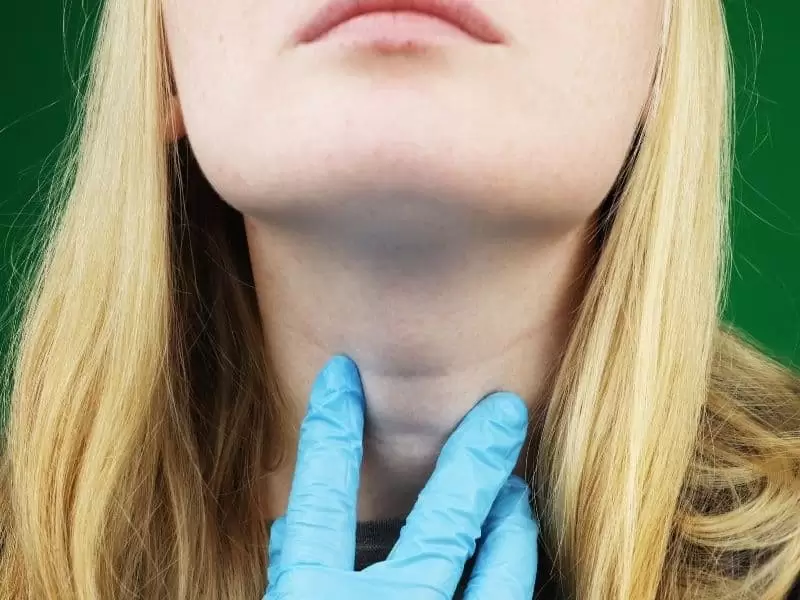



A small lump noticed in your thyroid gland can start to cause concern. Every day, more people are diagnosed with a thyroid nodule during routine health check-ups. While these nodules are sometimes completely harmless, in some cases they can be a sign of more serious conditions. So, when is a thyroid nodule dangerous? Can nodules that grow silently be ignored, or should they always be monitored? Which symptoms serve as a “pay attention” warning?
I Have a Lump in My Throat
A thyroid nodule is the name given to abnormal masses or lumps that form in the thyroid gland located at the front of the neck. These nodules are usually round or oval in shape and may appear as a single nodule (solitary) or as multiple nodules (multinodular). Sometimes they are noticed as a visible swelling or a firmness felt when swallowing, but most often they are found incidentally during blood tests or ultrasound examinations performed for another reason.
A significant portion of these nodules are benign and often cause no symptoms. However, in some cases, nodules can affect thyroid hormones, grow and put pressure on surrounding tissues, or, very rarely, be malignant. Therefore, even though it is not true that “any lump should cause fear,” thyroid nodules still require a medical evaluation.
How Can You Tell If a Thyroid Nodule Is Benign or Malignant?
After being diagnosed with a thyroid nodule, the most common question patients ask is whether the nodule is benign or malignant. This distinction is crucial because it directly affects follow-up and treatment planning. So how can we tell whether a nodule is benign or malignant?
The first step is usually a thyroid ultrasound, which provides many clues about the structure of the nodule. However, for a definitive diagnosis, a fine-needle aspiration biopsy (FNAB) may be required in some cases.

Which Ultrasound Features Increase Suspicion of Cancer?
There are certain findings physicians pay close attention to on ultrasound. Some of these include:
- Irregular margins of the nodule
- Hyperechoic or hypoechoic appearance (structures that look brighter or darker on ultrasound)
- Microcalcifications (tiny calcified spots)
- The nodule showing increased blood flow
- The nodule being cold (non-functioning / not producing hormone)
- The nodule showing infiltration into surrounding tissues (spreading)
If one or more of these features are present, the physician will usually recommend a biopsy.
It is important to remember that ultrasound findings are only clues. Sometimes nodules that look very “worrisome” are completely harmless, while a nodule that appears innocent may still turn out to be cancer. For this reason, evaluation should always be done under the supervision of a specialist physician, using a comprehensive approach.
Why Should Thyroid Nodules With No Symptoms Still Be Followed?
Many people assume that if a health issue causes no symptoms, there is nothing to worry about. However, this approach can be misleading when it comes to thyroid nodules. Many thyroid nodules develop silently and grow without being noticed. The absence of symptoms does not necessarily mean the nodule is harmless.
Some nodules can remain for years without causing any complaints. But some may grow over time, disrupt thyroid hormone balance, or, rarely, become malignant. This is why nodules without symptoms should still be monitored.
What Happens If Thyroid Nodules Tend to Grow?
Thyroid nodules can increase in size over time. This growth may affect breathing, swallowing, and speaking. Large nodules can also cause visible changes in the shape of the neck. Beyond these physical effects, an underlying risk of malignancy may also be present in nodules that are growing.
For this reason, physicians usually create a follow-up plan even for silent nodules. Within this plan, the nodule’s size, shape, internal structure, and impact on hormone levels are monitored regularly.

What Do Nodules You Can Feel by Touch Usually Mean?
Did you feel a small firmness in your neck while washing your face in the morning or applying makeup? Or maybe you noticed an unusual movement when swallowing. These are often the moments when many people first become aware of a thyroid nodule.