



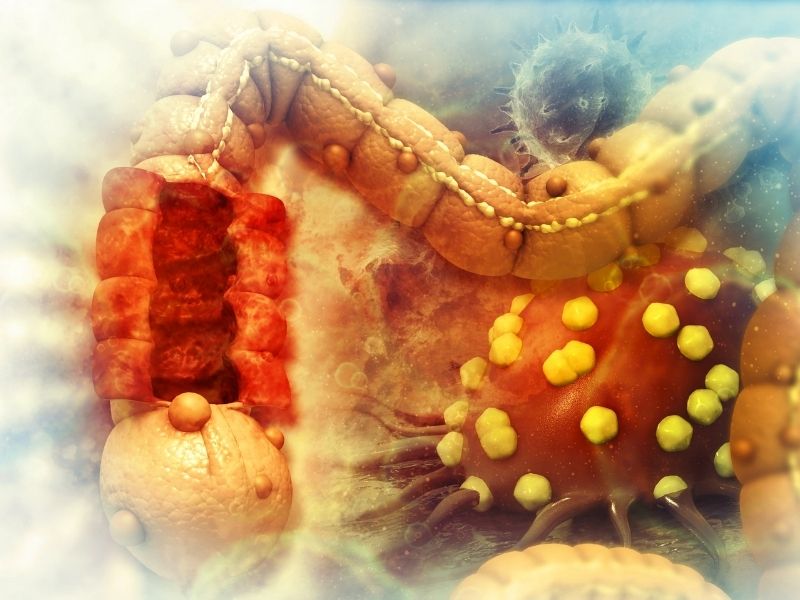
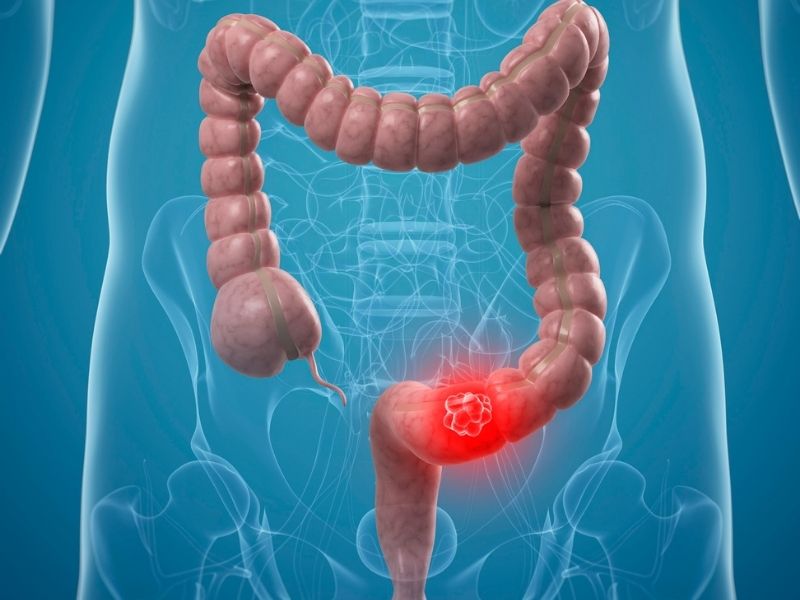
The colon, also known as the “large intestine,” is the final part of the digestive system. Colon cancer refers to cancers that occur in this region. The colon begins with the cecum and ends with the rectum, which is the widened final part of the colon.
Colon cancer can occur at any age, but it typically affects older adults. It often begins as small, noncancerous (benign) clusters of cells called polyps that form on the inside of the colon. Over time, some of these polyps can turn into colon cancer.
Polyps may go unnoticed when they are small and do not cause symptoms. They can be detected during screening tests performed for early diagnosis of colon cancer. When cancer is diagnosed early, the tumor may be limited to the colon. In advanced cases, it may spread to surrounding tissues, lymph nodes, the liver, lungs, and other organs. With early diagnosis, it may be possible to recover from colon cancer.
Symptoms Of Colon Cancer
Colon cancer may not cause any symptoms in the early stages. Complaints and symptoms can vary depending on the size of the cancer and its location. Signs and symptoms of colon cancer include:
- A persistent change in bowel habits (diarrhea or constipation)
- A change in stool consistency
- Rectal bleeding or blood in the stool
- Persistent abdominal discomfort such as cramps, gas, or pain
- A feeling that the bowel doesn’t empty completely
- Weakness or fatigue
- Unexplained weight loss
Although these symptoms do not always indicate colon cancer directly, it is very important to see a doctor for such complaints and to enable early diagnosis if a disease is present.
Risk Factors For Colon Cancer
In developed countries, the rate of colon cancer is 4 to 10 times higher than in developing countries. Causes of colon cancer can be listed as lifestyle factors, environmental changes, and inherited genetic factors. Although the exact cause of colon cancer is not fully known, the following risk factors are considered:
- Age: Colon cancer can be diagnosed at any age, but the risk increases after age 50.
- History of colon cancer or polyps: If you have had colon cancer or colon polyps, your risk of developing colon cancer in the future is higher.
- Inflammatory bowel conditions: Inflammatory diseases of the colon such as ulcerative colitis and Crohn’s disease may increase your risk of colon cancer.
- Inherited disorders that increase colon cancer risk: Conditions that run in families, such as familial adenomatous polyposis (FAP) and Lynch syndrome (also known as hereditary nonpolyposis colorectal cancer, HNPCC), are associated with a higher risk of colon cancer.
- Family history of colon cancer: Having relatives with colon cancer increases the risk for others.
- Low-fiber, high-fat diet
- A sedentary lifestyle
- Diabetes
- Alcohol and smoking
- Obesity
Diagnosis In Colon Cancer
Screening Tests
These are performed to reduce the risk of dying from colon cancer and to detect colon cancer or noncancerous polyps. The key difference is that these individuals have no complaints or symptoms. Screening is used to detect colon cancer early and increase the chance of successful treatment. Screening is typically recommended after age 50, when an increase in colon cancer risk is observed. If there is a family history of colon cancer, inherited disorders that increase colon cancer risk, or inflammatory bowel disease, screening is started at an earlier age.
Diagnosis Of Colon Cancer
- Colonoscopy: This is a procedure that visualizes the entire colon and rectum using a camera with a light at its tip. During the procedure, the inner lining of the colon and rectum is examined; if a suspicious area is found, tissue samples (biopsies) can be taken and polyps can be removed.
- Blood tests: No blood test can definitively tell whether you have colon cancer. Blood tests may be performed to look for clues about your general health, such as kidney and liver function tests. However, there are certain markers that may be elevated in colon tumors, such as carcinoembryonic antigen (CEA). These tests are used for follow-up rather than for establishing a diagnosis.
Determining The Extent Of Cancer
In patients diagnosed with colon cancer, determining the extent (stage) of the cancer is important for planning treatment. For this purpose, certain tests may be performed. Imaging methods such as CT scans that can show the abdomen and chest may be used. In many cases, the stage of colon cancer may not be fully determined until after surgery.
Treatment In Colon Cancer
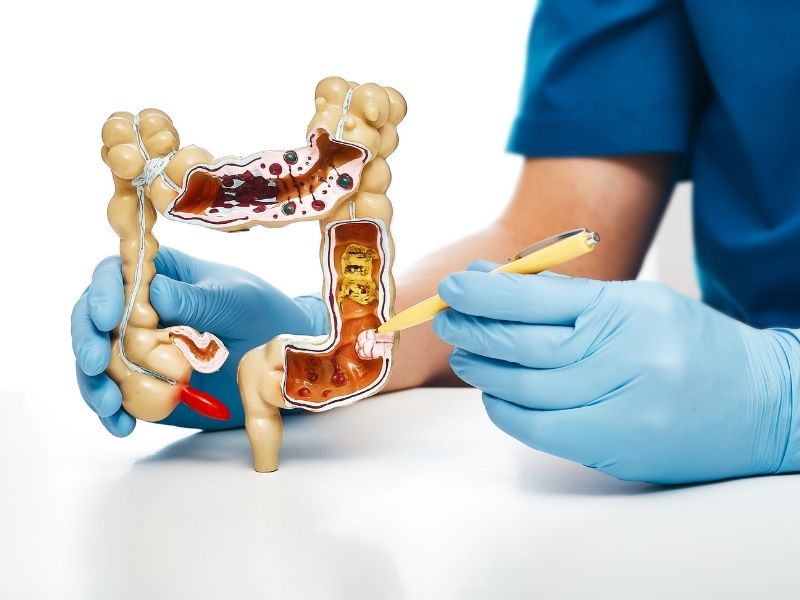
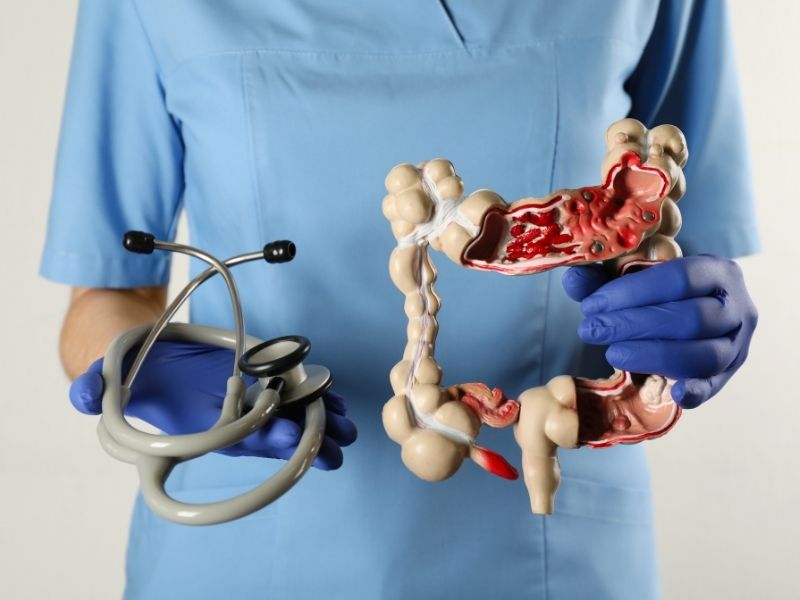
The main treatment for colon cancer is surgery. However, the type of surgical treatment may vary depending on the tumor’s location in the colon, size, stage, the patient’s general health status, and the urgency of the tumor (such as obstruction, perforation, or bleeding).
Surgical Treatments
Surgery For Early-Stage Colon Cancer
- Colonoscopic polypectomy: Removal of polyps during colonoscopy. If the cancer is very small, localized, completely within a polyp, and at a very early stage, it can be removed entirely during colonoscopy.
- Endoscopic mucosal resection (EMR): Larger polyps can be removed using a method called endoscopic mucosal resection. With special instruments passed through the colonoscope, the entire polyp and a portion of the inner lining of the colon can be removed.
- Minimally invasive surgery (laparoscopic, closed surgery): Polyps that cannot be removed during colonoscopy may be removed using laparoscopic surgery. This operation is performed through a few small incisions in the abdominal wall. The diseased part of the colon and lymph nodes in the area where the cancer is located can be removed.
Surgery For More Advanced Colon Cancer
- Partial colectomy (removal of part of the large intestine): In this surgery, the portion of the colon containing the cancer is removed up to healthy tissue. Surrounding lymph nodes are also removed. Then the remaining healthy ends are reconnected. This procedure is generally performed with open surgery, but in recent years the use of minimally invasive approaches (laparoscopy, robotic) has increased.
- Ostomy (stoma): When it is not possible to reconnect the healthy parts of the colon, a stoma may be needed to protect the bowel connection or due to the patient’s health condition. This procedure involves bringing a portion of the intestine to the abdominal wall so that stool can pass into a bag. The stoma may be temporary or, in some cases, permanent.
Advanced Cancer Surgery
If the cancer is very advanced or the patient’s general health condition is very poor, surgery may be performed only to relieve symptoms. This operation is not done to cure the cancer; instead, it is performed to reduce signs and symptoms such as obstruction, bleeding, or pain.
Chemotherapy
Chemotherapy consists of chemical drugs used to destroy cancer cells. For colon cancer, chemotherapy is usually given after surgery if the cancer is larger or has spread to lymph nodes. In this way, chemotherapy can kill any remaining cancer cells in the body and help reduce the risk of recurrence. In some cases, it may also be given before surgery to shrink the tumor and improve the effectiveness of surgery.
In advanced-stage cancers that are not suitable for surgery and have spread throughout the body, it may be combined with radiotherapy to help reduce symptoms.
Radiotherapy (Radiation Therapy)
Radiation therapy uses powerful energy sources such as X-rays and protons to kill cancer cells. It can be used to shrink a large cancer before surgery, making it easier to remove.
When surgery is not an option, radiation therapy can be used to relieve symptoms such as pain. Sometimes radiation is combined with chemotherapy.
Immunotherapy
Immunotherapy is a drug treatment that uses your immune system to fight cancer. Your body’s disease-fighting immune system may not attack your cancer because cancer cells produce proteins that prevent immune system cells from recognizing them. Immunotherapy works by interfering with this process. Immunotherapy is usually reserved for advanced colon cancer.
Survival In Colon Cancer
Survival rates are calculated for people who have the same type and stage of cancer. It does not tell an individual how long they will live after treatment. Instead, it provides information to patients and their relatives about how successful the treatment is likely to be. The five-year survival rate from the onset of the disease is above 90% for people diagnosed at stage 1, but this rate decreases as stages progress. In stage 4 colon cancer, the survival rate is observed to fall below 10%.