


Gallbladder is located in the upper right part of the abdomen, beneath the liver. In healthy adults, it is a pear-shaped hollow organ approximately 8 cm in length and 4 cm in width. The gallbladder connects to the common bile duct (main bile duct) through a pathway called the cystic duct. The common bile duct carries bile from the liver and the gallbladder to the duodenum (the first part of the small intestine).
The function of the gallbladder is to store bile produced by the liver. Bile is a secretion necessary for the digestion of fats consumed in foods. After eating a fatty meal, the gallbladder, stimulated by a hormone called cholecystokinin, releases the stored bile into the duodenum.
Gallstones (Cholelithiasis)
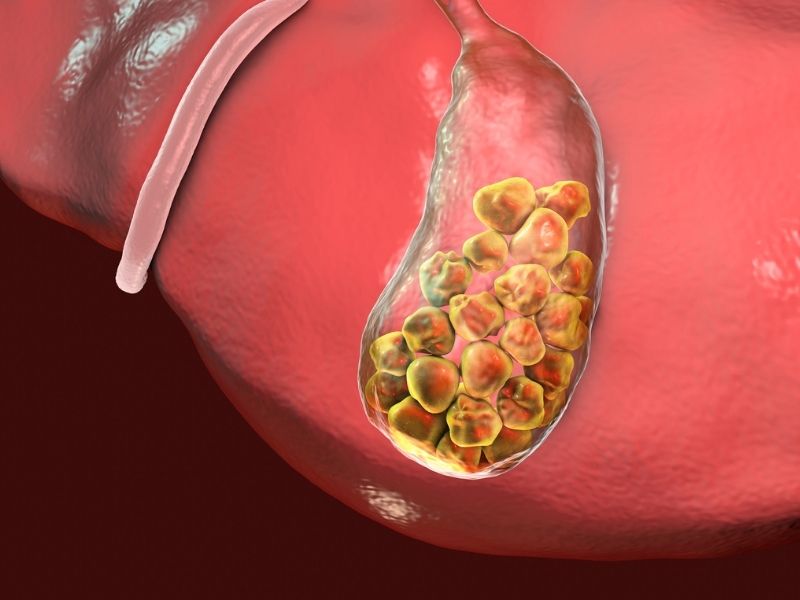
Gallstones, defined as cholelithiasis, are a condition that is common in developed countries but can be seen in all parts of the world. Its frequency increases with age. Gallstones form after cholesterol, which is present at very high levels in bile, precipitates and creates sediment. The size and number of stones may vary from person to person.
Symptoms Of Gallstones
Biliary sludge and newly formed gallstones may often cause no symptoms in the early stages. Research has shown that about half of all gallstones do not cause any complaints or symptoms throughout a person’s lifetime.
The main symptom of gallstones is a type of pain specific to the biliary system called biliary colic. The characteristics of this pain include:
- Starts suddenly after meals
- Builds up for 15–20 minutes, then gradually eases over up to 4–5 hours
- Does not respond to nausea/vomiting remedies, medications used to relieve heartburn, bowel movements, passing gas, or changing position
- May be accompanied by nausea and excessive sweating
- Is dull and intense in character
- Resolves on its own over time
- May radiate to the right shoulder and back
- May cause intermittent indigestion

Risk Factors For Gallstones
Risk Factors For Gallstones can be listed as follows;
- Female sex
- Age 40 or older
- Overweight or obesity
- Sedentary lifestyle
- Pregnancy
- A diet high in cholesterol and low in fiber
- Family history of gallstones
- Diabetes
- Certain blood disorders such as sickle cell anemia or leukemia
- Rapid weight loss
- Taking estrogen-containing medications such as oral contraceptives or hormone therapy
- Liver disease
Complications Of Gallstones
Inflammation Of The Gallbladder (Cholecystitis): This occurs when stones formed inside the gallbladder become lodged in the neck of the gallbladder and cause inflammation (infection/inflammatory response) in that area. Severe pain and fever may develop. In symptomatic gallstones, the risk of developing acute (sudden-onset) cholecystitis may vary between 1% and 3%. In addition to pain and fever, chills/shivering, loss of appetite, nausea, and vomiting may also occur. Cholecystitis is a condition that requires urgent intervention. Otherwise, it can lead to potentially life-threatening complications (adverse outcomes).
Blockage Of The Common Bile Duct: Gallstones may cause obstruction in the bile ducts that carry bile produced in the liver and stored in the gallbladder to the small intestine. After blockage of the common duct, severe pain, jaundice, and infection of the ducts (cholangitis) may occur.
Blockage Of The Pancreatic Duct: The pancreatic duct is a channel that carries pancreatic juice to the common bile duct. Gallstones may cause obstruction in the pancreatic duct along with the common bile duct. This may result in inflammation of the pancreas known as pancreatitis. When pancreatitis develops, sudden and severe abdominal pain occurs. Pancreatitis is a serious condition that can be life-threatening.
Gallbladder Cancer: Due to long-term irritation, there may be an increased risk of gallbladder cancer in people with a history of gallstones. Although the risk may be increased, gallbladder cancer is a rare type of cancer, so this complication is uncommon.
Diagnosis Of Gallstones
Diagnosis is made based on typical physical examination findings along with blood, urine, and stool tests and ultrasonography (US). With these tests, an almost definitive diagnosis can be reached. Rarely, other imaging methods such as computed tomography, MRI, or endoscopic ultrasound may be used. In addition, for stones located in the bile duct, endoscopic procedures called ERCP can be used not only for diagnosis but also for treatment.
Treatment Of Gallstones
Surgery is not required for gallstones that do not cause symptoms or complaints. Whether surgery is necessary is determined by your doctor. For the treatment of gallstones, removal of the gallbladder (cholecystectomy) is performed. This procedure can be carried out with open or minimally invasive (laparoscopic) surgery. Open surgery is generally preferred in patients who have had previous abdominal surgery, in those with another abdominal pathology besides gallbladder disease, or if complications arise during the operation. Otherwise, laparoscopic surgery is preferred for most patients.
In laparoscopic cholecystectomy (removal of the gallbladder with a minimally invasive technique) performed under general anesthesia, 3–4 small incisions are made in the abdominal area. Through these incision sites, small illuminated surgical instruments are inserted into the abdominal cavity and the gallbladder is removed. Patients are observed for a while after surgery, and if no adverse situation occurs, they can usually be discharged the same day or the day after the operation.
After the gallbladder is removed, bile flows directly from the liver into the small intestine rather than being stored in the gallbladder. You do not need a gallbladder to live, and removal of the gallbladder does not affect your ability to digest food.
There are some medications available to dissolve gallstones. Oral medications may help dissolve gallstones. However, dissolving gallstones in this way can take months or years, and if treatment is stopped, gallstones will likely form again. In addition, these medications are insufficient for preventing complications related to gallstones.