Fibroadenoma Diagnostic Methods
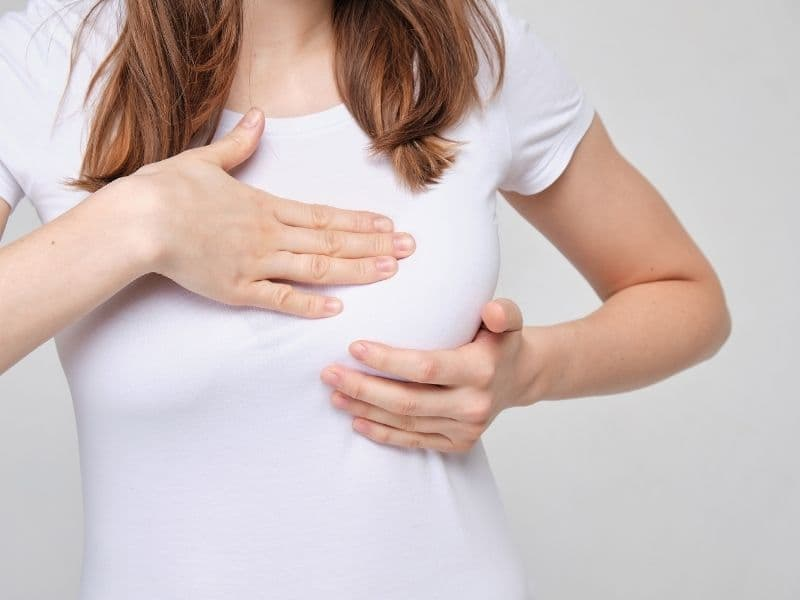
In the diagnosis of fibroadenoma, methods such as physical examination, ultrasonography, mammography, and in some cases needle biopsy are used. During physical examination, fibroadenoma is felt as a mass with clear borders, a smooth surface, and that can be easily moved between the fingers. Although physical examination provides preliminary information about fibroadenoma, advanced imaging and additional evaluations are required for a definitive diagnosis. At this point, imaging methods come into play.
Ultrasonography is the most frequently preferred method in the diagnosis of fibroadenoma. It examines breast tissue in detail by using high-frequency sound waves. It gives more effective results than mammography especially in young women due to dense breast tissue.
Mammography is used more in women over the age of 40. It provides imaging of breast tissue with X-rays. However, in younger age groups, the density of breast tissue can reduce the effectiveness of mammography. For this reason, more definitive results are obtained when ultrasonography is evaluated together with mammography.
In suspicious cases, a needle biopsy is performed to take a small tissue sample from the fibroadenoma. This method is of great importance in distinguishing fibroadenoma from other malignant tumors. The sample taken is examined by a pathologist and its cellular structure is evaluated. Biopsy has a critical role especially in the evaluation of rapidly growing masses or masses with structural changes.
Follow-up Process of Fibroadenomas
The follow-up process of fibroadenomas is of critical importance to monitor the behavior of the masses and to detect any risk early. Usually, with check-ups performed every 6 months, possible changes in the size, shape, and structure of fibroadenomas are monitored. This process generally continues for 2.5-3 years and does not require treatment unless any risk is seen. However, if a significant growth or shape change is noticed in the mass during follow-up, further examinations may be performed.
Helping patients learn and regularly perform breast self-examination during this process helps detect possible changes early. Especially during processes such as menopause, hormonal changes, or pregnancy, the behavior of the masses may change. As long as the fibroadenoma does not grow, intervention is not required; however, treatment options are evaluated for masses that grow or cause anxiety in the patient. Therefore, regular follow-up is important both for patient safety and treatment planning.
Treatment Methods for Fibroadenomas
Since fibroadenomas are generally benign and do not carry a risk of turning into cancer, they do not require treatment in most cases. However, in some cases, treatment may become necessary. In particular, fibroadenomas that increase in size, reach a palpable size, cause pain or discomfort, or cause psychological anxiety in the patient can be surgically removed. The surgical procedure is usually performed under local anesthesia, and the patient can return to daily life in a short time. During surgery, the fibroadenoma is removed without damaging the surrounding healthy tissues, which ensures that aesthetic concerns are minimized.
In addition to surgical treatment, minimally invasive methods can also be used in the treatment of fibroadenomas. These methods include cryoablation and radiofrequency ablation. Cryoablation involves freezing the fibroadenoma with low temperatures to shrink it. This method is generally suitable for small and asymptomatic fibroadenomas. Radiofrequency ablation, on the other hand, destroys the fibroadenoma by heating it with high-frequency radio waves. Since both methods are minimally invasive, they carry less risk than surgery and offer a fast recovery process.
When making a treatment decision, factors such as the patient’s age, general health condition, the size of the masses, and the growth rate are taken into consideration. In addition, if any change is observed in the masses during the follow-up process, treatment may be started. Each of the treatment options is customized according to the patient’s needs.
Fibroadenoma FAQ
1. Fibroadenoma can it turn into cancer?
Fibroadenomas are generally benign tumors that do not carry a risk of turning into cancer. However, in rare cases, other lesions that resemble a fibroadenoma and carry a risk of malignancy may be seen. Therefore, regular follow-up and biopsy in suspicious cases are important.
2. How does a fibroadenoma feel?
Fibroadenomas are usually felt as a mass with a smooth surface, well-defined borders, and that can be moved between the fingers. In most cases, it does not cause pain, but in some women it may create a feeling of discomfort.
3. What happens if a fibroadenoma is not treated?
Most fibroadenomas remain the same size over time without showing changes and do not require treatment. However, in cases such as growth or causing discomfort, treatment options are evaluated.
4. In which cases is surgical treatment necessary?
If the fibroadenoma is growing rapidly, has reached a size that can be felt by hand, or is causing anxiety in the patient, surgical intervention may be considered. Other than that, asymptomatic masses generally do not require surgery.
5. Can it recur after fibroadenoma treatment?
After a fibroadenoma is removed, new fibroadenomas may occur in a different area. Therefore, regular follow-up and self-examination are important.