

Thyroid nodule refers to lumps or masses within the thyroid tissue that can vary in structure, number, and size. Their diameter can range from a few millimeters to several centimeters. The number may be single (nodular goiter) or may increase to be multiple (multinodular goiter) enough to fill both thyroid lobes.
Although at least one thyroid nodule has been detected in 20–76% of the population in ultrasonographic studies, cancerous change is seen in only 5–14% of these.
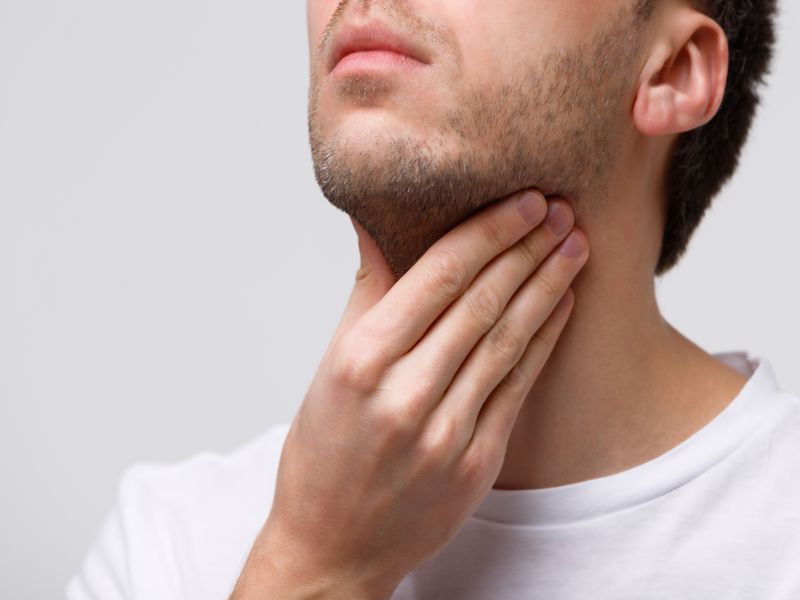
Most of the time, it is not known that a person has a thyroid nodule until it is discovered during a routine medical examination. Sometimes it may be detected during a screening performed for another health reason. In general, they cannot be noticed by patients unless they reach large sizes and cause compression symptoms and cosmetic discomfort.
What Causes a Thyroid Nodule?
When the causes of thyroid nodules are examined, iodine deficiency is seen to emerge. The frequency of thyroid nodules increases in people who experience iodine deficiency. There are also different factors that cause thyroid nodules. Advanced age, excess weight, genetic reasons, and a family history of thyroid disease cause thyroid nodules.
What Should People with Thyroid Nodules Pay Attention To?
A thyroid nodule can lead to many symptoms that cause discomfort. The growth rate of the nodule is linked to the degree of visible distortion when viewed from the outside. For this reason, people who feel problems such as swelling in the thyroid area, that is, the neck region, tenderness, pain, or difficulty swallowing should definitely see a specialist doctor. Patients diagnosed with thyroid nodules should also stay away from iodine and iodine-containing foods in their daily lives. Bad habits such as smoking, alcohol, and excessive tea/coffee should also be avoided.
Who Is More Likely to Have Thyroid Nodules?
Thyroid nodules are more common in women than in men. With increasing age, the frequency of thyroid nodules increases. It is seen more frequently in people over the age of 50, and after the age of 70, the rate can rise up to 70%. Thyroid nodules are also seen in those with a family history of this disease. The risk of nodules is higher in patients who have received radiation therapy to the thyroid area, that is, the head or neck regions, and in people living in iodine-deficient regions.
Types of Thyroid Nodules
Types of thyroid nodules are found in three types according to the structures of the nodules inside the thyroid gland. Nodules are masses that are fluid-filled or solid. They are listed as solid, semi-solid/semi-fluid, and fluid-containing nodules.
Thyroid nodules can also be evaluated according to their hormone secretion status. There is also a classification called hot, warm, and cold. Hot thyroid nodules produce more hormones than normal thyroid tissue. Warm thyroid nodules produce hormones like a normal thyroid. Cold thyroid nodules produce hormones at a lower level than normal. Hot nodules, due to excess hormone production, cause a condition called hyperthyroidism. In this condition, which is understood with thyroid scintigraphy, the areas that produce more hormones appear darker in color.
Symptoms of a Thyroid Nodule
A thyroid nodule can sometimes be understood through symptoms, and sometimes it is detected during a routine examination. It mostly manifests itself with swelling and discomfort in the neck area.
- Swelling and fullness in the neck
- A feeling of discomfort in the neck
- Hoarseness or voice breaking due to pressure on the nerve leading to the vocal cords
- Shortness of breath or difficulty swallowing due to pressure on the windpipe or esophagus
- Findings of hyperthyroidism due to excessive hormone secretion
Since hot thyroid nodules produce excessive hormones, they can cause symptoms of hyperthyroidism to appear in a person. Symptoms such as muscle weakness, heart palpitations, disruption of menstrual regularity, rapid metabolism due to excessive hormone production, and related weight loss may be seen.
Diagnosis in Thyroid Nodules
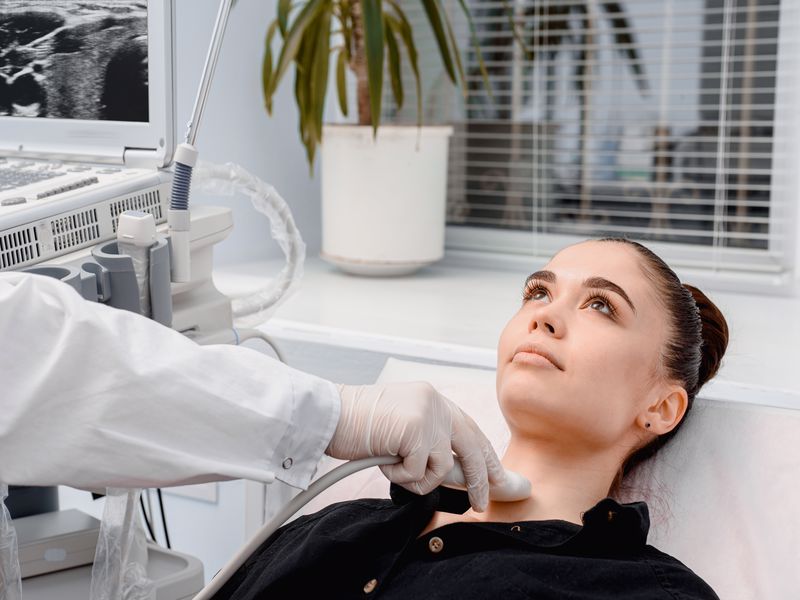
In the diagnosis of thyroid nodules, medical history and physical examination should first be performed. With thyroid function tests (T3, T4, TSH), information is tried to be obtained about the function of the nodule. With thyroid ultrasound, the presence, structure, number, size, vascularity, and whether there is calcification are evaluated. If a suspicious appearance is detected in the evaluation performed with ultrasound, a tissue diagnosis is obtained with fine-needle aspiration biopsy (FNA) of the thyroid. If the result is benign after biopsy, it is followed up according to the patient’s condition; however, if it is malignant, meaning there is a risk of cancer, surgical intervention is required.
Treatment in Thyroid Nodules
In the treatment of thyroid nodules, small nodules that are non-functioning and do not have suspicious ultrasound findings are followed up at 3–6 month intervals. During follow-up, TSH measurement is performed and size and characteristics are evaluated with the help of imaging techniques.
If the nodule diameter increases, if the patient is bothered by this condition, if compression symptoms begin to appear, if there is a suspicious appearance on ultrasound, or if suspicion of cancer is reported in FNA, removal of the tissue by surgery is recommended.
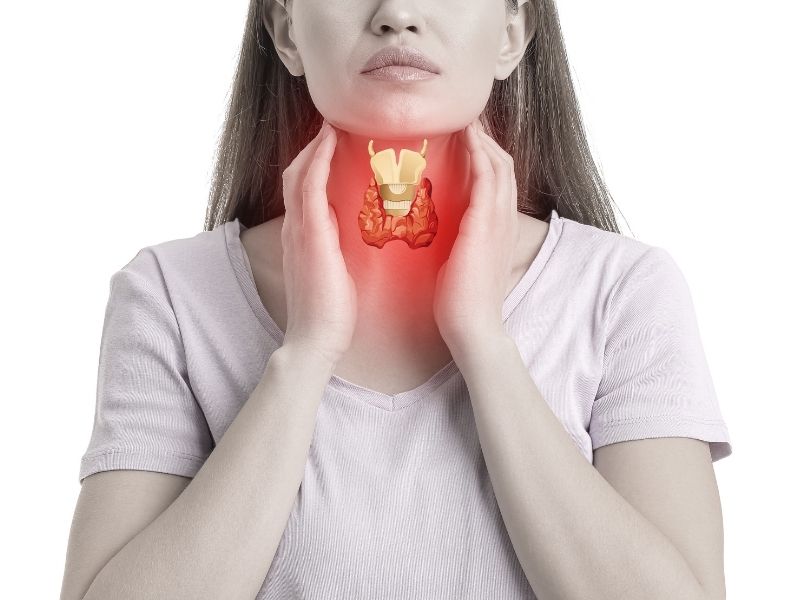
Thyroid Nodule Surgery
Thyroid nodule surgery can be performed in cases where the nodule is larger than 2 cm or when there are many hot nodules. Surgery can also be performed if the patient is bothered by the condition, if there is pain, or if there is suspicion of cancer. In some cases, hormone balance is first achieved with medication therapy and then a surgical procedure is performed.
In thyroid nodule surgery, the thyroid lobe or the entire thyroid can be removed. If thyroid cancer is present, the surrounding tissues where the cancer has spread should also be cleaned. Thyroid nodule surgery can be performed as open surgery or closed surgery (scarless or endoscopic).
Thyroid Nodule FAQ
1. How many mm does a thyroid nodule have to be to be dangerous?
The normal size of a thyroid nodule is known to be 1–2 cm. If it exceeds 2 cm, it becomes visible from the outside. Thyroid nodules larger than 3 cm must definitely be removed surgically.
2. What happens if nodules in the throat are not treated?
If thyroid nodules need to be removed or treated but treatment is delayed or not done, the risk of turning into cancer can be high.
3. Can a thyroid nodule go away on its own?
Some thyroid nodules are benign and do not bother the patient. These nodules do not need treatment; they only require regular follow-up.
4. What should someone with a thyroid nodule not eat?
Patients with thyroid nodules should avoid iodine-rich foods, drinks such as tea and coffee, and stay away from soy and gluten.

