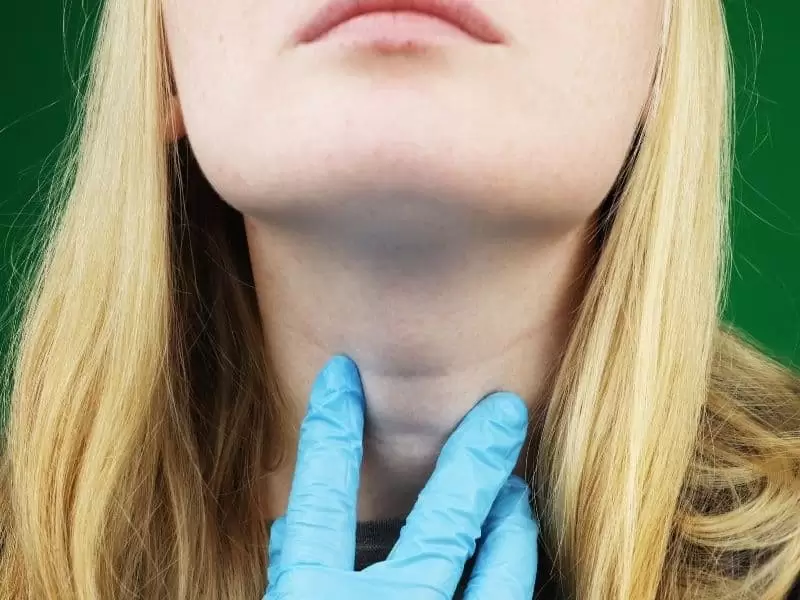



Thyroid cancer largely shows recovery when the correct diagnosis and treatment are applied. It is a condition that occurs when the cells in the thyroid gland become cancerous. It is generally seen as a lump in the neck or as a nodule within the thyroid gland. The nodule may be as small as a pea or as large as a walnut. Cells cluster together and form a mass, leading to the disease. It is divided into two types: non–hormone-secreting and hormone-secreting.
The non–hormone-secreting type must be taken seriously because the likelihood of becoming cancerous is higher. For this reason, it should be checked as soon as possible with a biopsy. In this way, it can be determined whether cancerous change has occurred. In this case, it is important to avoid smoking and alcohol, to have a thyroid ultrasound performed, and to consume healthy foods.
What Is Thyroid Cancer?
What Is Thyroid Cancer? When all cancer types are considered, it is observed to be one of the least common cancers. It is also known as the cancer type that responds most positively to treatment. It is observed as the most common endocrine cancer after ovarian cancer. Only 1% of all cancer cases are made up of this cancer.
It is rarely seen in children. The likelihood of occurrence increases after the twenties. It is also a type of cancer seen more frequently in women than in men. This type of cancer can be treated with surgical methods. Part or all of the thyroid gland is removed. In this way, cancerous cells are cleared.


What Are The Symptoms Of Thyroid Cancer?
What Are The Symptoms Of Thyroid Cancer? This type of cancer generally does not cause symptoms. It may be detected incidentally. In rare cases, it may lead to a lump in the neck, hoarseness, or difficulty swallowing. In some cases, toxic goiter may occur. Today, the most effective method used to detect the disease is ultrasonography.
If the presence of nodules in the thyroid glands is noticed and suspicion arises, a biopsy may be performed. With a biopsy, it is determined whether there is a cancerous cell. If a benign nodule is detected, the patient is followed up. If it is malignant, treatment is initiated. Cancer that does not cause symptoms in the early stages may create the following symptoms in later stages:
- Swelling and a lump in the neck
- Hoarseness
- Difficulty swallowing
- Bone loss
- Difficulty breathing
- Pain spreading from the neck toward the ears
- Fatigue
- Weight gain
- Irritability
- Decreased sexual desire
Can Goiter Turn Into Cancer?
Can Goiter Turn Into Cancer? There are three different diseases related to the thyroid gland. These are known as goiter, thyroid inflammation, and thyroid cancer. The most common condition is thyroid nodules. This condition occurs more frequently in people who adopt a diet poor in iodine. The likelihood of this condition occurring is higher in women than in men. One or more lumps may be present in this area.
Nodules in the area may, in some cases, contain cancerous cells. To understand whether this is the case, a biopsy needs to be performed. With a biopsy, it can be understood whether the mass is benign or malignant. There is a possibility that goiter can turn into cancer, but this is quite rare. In addition, this cancer is among those that can be treated very successfully.


Thyroid Cancer Treatment
Thyroid cancer treatment is most effectively performed with surgical treatment. In some cases, only part of the thyroid gland is removed; in others, all of it is removed. Removing it completely is a very safe method because it reduces the likelihood of recurrence after surgery. The duration of the operation may vary depending on the patient’s condition. Overall, it is a surgical method with successful outcomes, and the patient is discharged after staying in the hospital for one night. Risks are rarely seen.